

As students across the UK compete for over 668,170 first-degree university enrolments, according to the Higher Education Statistics Agency (HESA) Student Statistics, they face tightening competition for graduate roles, traditional academic grades alone often fail to show the full picture of an individual’s capability.
Around 87% of UK graduates were in some form of work or further study 15 months after graduation, according to the latest HESA Graduate Outcomes data. In a competitive graduate job market, demonstrating practical skills and experience can provide employers with evidence beyond a traditional CV.
Academic research on e-portfolios and graduate employability demonstrates that a digital portfolio gives students a dynamic platform to demonstrate practical skills, showcase creative development, and prove real-world competence.
What Is A Digital Portfolio?
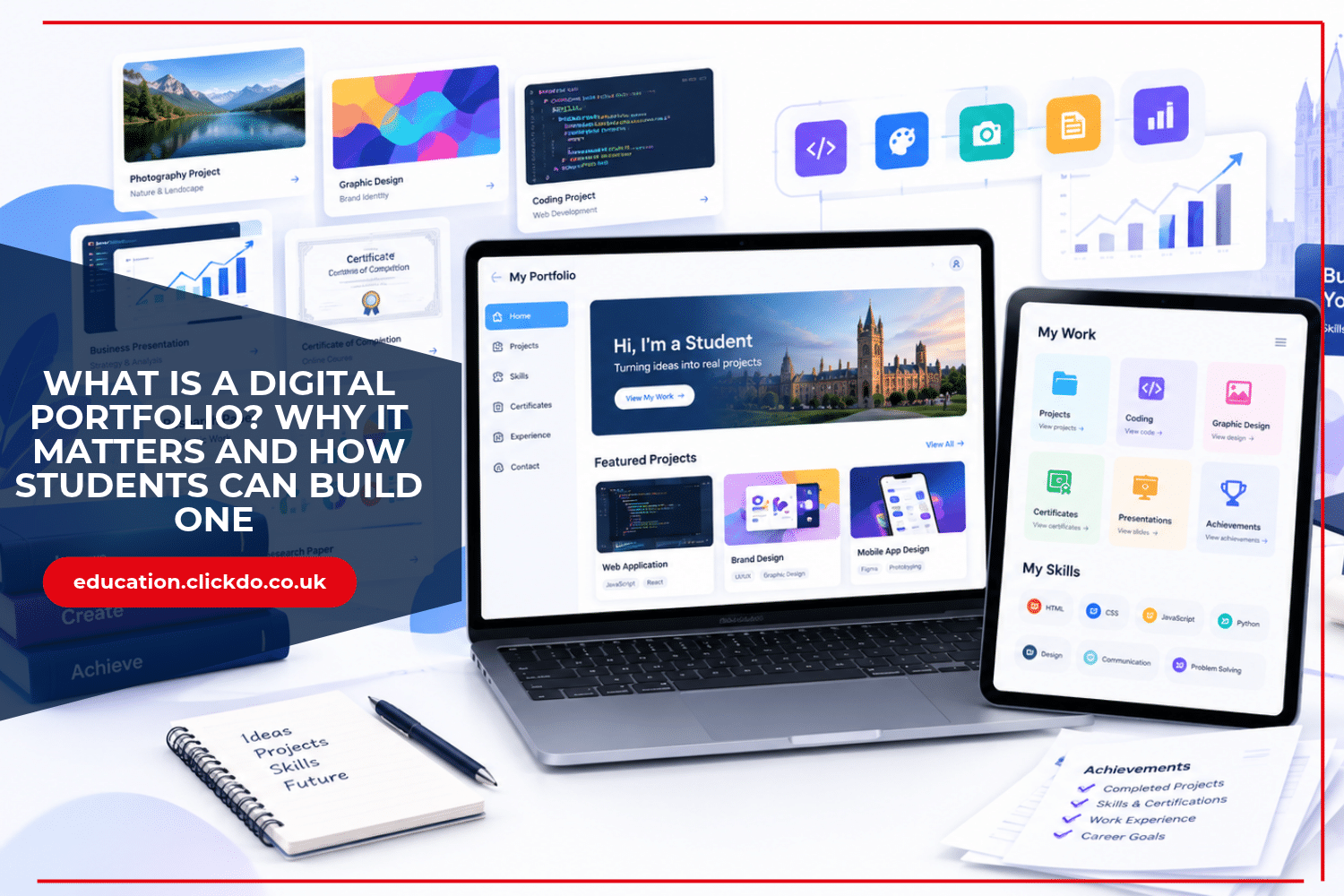
A digital portfolio is an online collection of a student’s work, projects, and achievements designed to highlight their personal and professional growth. For structured foundational advice on planning these collections, students often review digital portfolio creation learning modules. Unlike a static CV, it provides tangible evidence of what a student can actually build, write, or design.
Students typically include elements such as:
- School or university coursework and independent research projects
- Creative writing, essays, and digital publications
- Graphic design assets, brand mock-up designs, and UI/UX prototypes
- Photography, film reels, and multimedia content
- Coding repositories, software applications, and technical builds
- Presentations, event plans, and case studies
- Certificates from specialized online courses and microcredentials
- Documented volunteering experiences, clubs, and work placements
Why Are Students Creating Digital Portfolios?
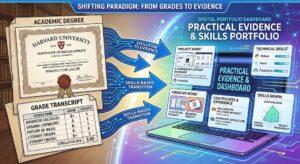
There is growing emphasis on demonstrating practical skills alongside formal qualifications. The latest Department for Education Employer Skills Survey found that 27% of UK vacancies in 2024 were skill-shortage vacancies, meaning they were difficult to fill because applicants lacked the required skills, qualifications or experience.
For students and graduates, a digital portfolio provides a practical way to showcase projects, coursework, creative work, technical skills, and achievements alongside a traditional CV. It can give employers a clearer view of what a candidate has actually produced and the skills they can demonstrate.
From Grades to Real-World Skills
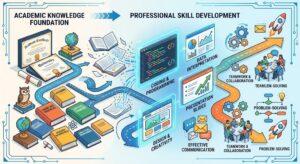
While exam results confirm academic aptitude, employers and admissions tutors increasingly look for holistic human and technical capabilities. When building a well-rounded professional profile, students frequently explore specialized career skills for successful employment alongside foundational soft skills to make their technical projects shine.
Aligning with broader competence benchmarks like the Jisc Digital Capabilities Framework, a structured portfolio highlights key strengths spanning digital creation, innovation, and communication:
- Communication: Expressed through clear project briefs, blog posts, or presentation layouts.
- Creativity and Problem-Solving: Demonstrated by walking through the hurdles overcome during a complex project.
- Teamwork: Evidenced by detailing collaborative roles in group tasks or community initiatives.
- Digital Literacy: Demonstrating modern AI literacy skills is reflected directly in your choice of digital platform, seamless multimedia integration, and clean layout design.
Digital Portfolios and University Applications
 For students aiming for higher education or alternative professional pathways—such as those pursuing degree apprenticeships in the UK—portfolios serve as powerful supplementary assets.
To understand how early academic preparation transitions into higher education readiness, candidates frequently reference insights from a comprehensive university fresher preparation guide. Admissions teams in specialized sectors welcome these practical showcases during interviews to gauge a candidate’s passion, technical baseline, and self-motivation.
Why Employers Are Interested in What Students Can Actually Do
For internships, graduate schemes, and modern apprenticeships, hiring managers look for candidates who can hit the ground running. Research from the Department for Education’s Employability programmes and work placements in UK higher education report highlights that students who utilize digital portfolios and work experience significantly boost their recruitment success by offering concrete proof of competence rather than just text-based assertions.
Furthermore, reports tracking the UK Graduate Careers Survey by High Fliers indicate that top graduate recruiters place a strong premium on candidates who can evidence hands-on project experience—paralleling how forward-thinking workplaces apply innovative staff learning strategies to foster continuous professional development.
How to Prepare and Build Your Digital Portfolio: Step-by-Step
Creating a compelling online showcase doesn’t require advanced web development knowledge. Students looking to structure their preparation workflow can refer to official student toolkits like the University of Kent Portfolio Guide or institutional frameworks provided via Jisc Getting Started with E-Portfolios to launch an effective platform:
- Select the Right Platform: Choose user-friendly tools suited to your field—such as Google Sites or Notion for general academic projects, GitHub for coders, or Behance and Dribbble for visual designers.
- Curate Core Artifacts: Gather 3 to 5 standout projects that best represent your capabilities. Quality outweighs quantity.
- Structure Essential Pages: Build a clean sitemap featuring a welcoming Home/About Me page, a Projects/Work showcase, and a clear Contact page.
- Draft Contextual Descriptions: For every project, write a concise 50-to-100-word breakdown outlining the objective, the tools or methodologies used, your specific role, and the final outcome.
- Incorporate Multimedia Evidence: Embed high-resolution images, short video demonstrations, code snippets, or presentation decks to make the work interactive.
- Test Mobile Responsiveness: Ensure your site loads quickly and adapts smoothly across smartphones, tablets, and desktop browsers.
If you specialize in writing or content creation and want to tailor your showcase specifically to that industry, you can follow this guide on how to build an online portfolio as a copywriter for targeted tips and examples.
How Social Platforms Can Complement a Digital Portfolio
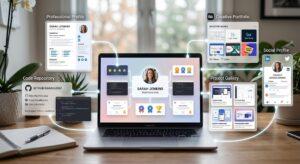
Professional and creative platforms can complement a student’s digital portfolio by providing additional places to present projects, skills, and achievements. LinkedIn allows students to highlight projects, courses, skills, awards, and other academic achievements on their profiles.
For students developing technical skills, GitHub profiles can be used to showcase coding projects and contributions. GitHub also recommends highlighting selected projects on a profile, allowing students to demonstrate their practical work and experience.
Used alongside a personal portfolio website, these profiles can give students more ways to demonstrate their projects, interests, skills, and development as they progress through their studies.
What Makes a Digital Portfolio Useful?
A successful portfolio balances aesthetic presentation with functional clarity. Key design principles include:
- Easy Navigation: Intuitive menus that guide visitors directly to core projects.
- Mobile-Friendly Design: Responsive layouts that look sharp on smartphones and tablets.
- Regular Updates: Keeping recent achievements at the forefront.
- Conciseness: Relying on visual examples and brief bullet points instead of dense walls of text.
- Authenticity: Retaining a unique personal voice that reflects the student’s genuine professional identity.
Be Part of the Next Wave
At the UK Education Blog, we are committed to highlighting the student triumphs, modern career strategies, and institutional innovations shaping tomorrow. Are you a student building a standout digital portfolio, or an educator pioneering new university pathways?
Share your insights and success stories with our editorial team to be featured on our Trendspotter page. Let’s lead the conversation together—Get in touch with us today to have your voice heard!
Disclaimer: All information provided was correct at the time of publication and was collected with the help of accredited tools and real-world data insights.
Author Profile

- Passionate education content creator and designer, contributor, writer and content marketing allrounder.
Latest entries
 DictionaryOctober 8, 2026What Is a Digital Portfolio? Why It Matters and How Students Can Build One
  distance learningSeptember 24, 2026Education ROI: Is an International Business Degree Worth the Investment?
 Directory PostsSeptember 23, 202611 Best LMS Development Companies for Enterprise Online Learning Platforms
 ed techAugust 21, 2026What LMS Consulting Actually Is & When You Need It