

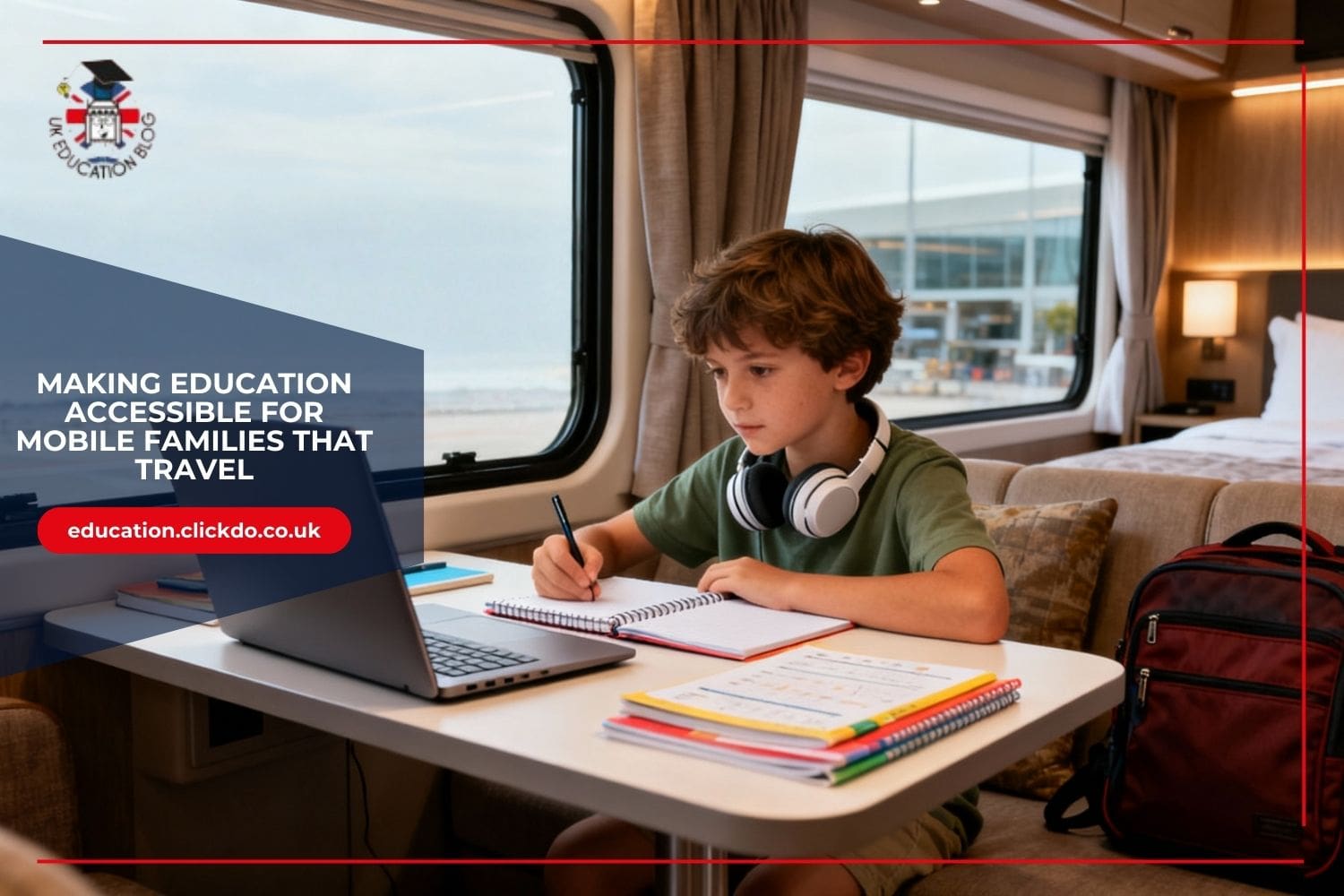

Families who travel frequently face unique challenges with their children’s education. Moving between locations disrupts learning, creates knowledge gaps, and makes consistency difficult. Traditional schooling expects physical attendance, which does not suit nomadic lifestyles or international commitments.
Virtual learning environments offer structured education that travels with the child, regardless of location or time zone. With proper internet access, pupils can maintain their studies without interruption, following a consistent curriculum that builds knowledge step by step rather than in fragments.
The rise of digital learning platforms has changed how education can be delivered. This is especially true for primary-aged children who benefit from routine and continuity.
UK-based online schools have adapted the national curriculum to virtual formats, ensuring young learners receive high-quality instruction while gaining needed flexibility.
Educational Challenges for Mobile Families

Frequent moves during primary school years can present educational hurdles for families. Each school change may result in missed lessons and inconsistent coverage of material, making it challenging for pupils to keep up with curriculum demands.
Social adjustment is another obstacle. Children must rebuild friendships and understand new classroom norms, sometimes several times a year. Pupils who relocate frequently may find it more difficult to maintain consistent performance on standardised assessments compared to those in stable environments.
Each move interrupts rhythm and progress across subjects. This can leave pupils struggling to reconnect learning from one setting to another. The result is repeated topics, missed skills, and general disruption that can reduce confidence and performance.
How Online Primary Schools Maintain Educational Continuity
Online primary education mirrors traditional structures but relies on digital delivery. Key Stage 2 subjects like English, Mathematics, Science, History, and Geography are all included. This maintains national standards across borders. Teacher-led classes, rather than self-paced modules, are the norm in high-quality programmes.
Small class sizes, usually no more than 16 pupils, enable teachers to focus on each child’s responses. In live virtual lessons, teachers ask questions, provide real-time feedback, and catch misunderstandings early, following many principles aligned with effective remote teaching practices. If a pupil struggles, the teacher responds immediately with adjusted explanations or direct support.
Social interaction is carefully built with group activities, discussions, and regular class participation. These systems help all pupils feel part of a supportive community. Children can progress securely, receive timely help, and practise social skills through direct interactions with classmates and teachers.
Technology Requirements for Successful Participation
Reliable technology forms the backbone of successful online primary education. A stable computer or tablet, webcam, microphone, and steady internet connection are essential. Digital skills are developed through structured training at the start of each term. Schools present clear instructions for platform navigation, assignment submission, and participation in group discussions.
Teachers monitor how pupils handle new tasks, such as uploading work or joining interactive lessons. When a difficulty arises, support is delivered promptly. This helps pupils become confident with required tools. Regular practice and teacher guidance prevent technical setbacks from disrupting progress, especially when students rely on digital learning tools that support consistency across different environments.
As digital learning becomes more advanced, many UK-based providers now design programmes around an interactive online primary curriculum, ensuring that children receive structured academic progression even when their environments change from month to month.
Safeguarding and Regulatory Compliance in Online Primary Education
UK online primary schools implement safeguarding protocols to protect pupils in digital environments. Staff members complete background checks, and safeguarding leads address digital concerns through secure reporting systems. Ongoing training and clear policies help ensure that pupils, staff, and parents know how to report any issues.
Protecting children’s data is a key consideration. Schools limit the information they collect, safeguard digital records, and explain their privacy practices in published policies that families can review. This clarity helps parents understand how pupil data is handled and what safeguards are in place.
Accreditation ensures that educational standards are met. Some British international online providers are inspected by independent bodies, with reports publicly available. Families often review inspection outcomes, teacher qualifications, and regulatory compliance before enrolling a child. Strong safeguarding standards now also reflect nationally recognised expectations, supported by dedicated online safety guidance for remote learning.
Measuring Success in Online Primary Education
Assessment uses familiar and digital-first strategies. Pupils take quizzes, digital worksheets, and full online tests. Teachers assess ongoing progress during live sessions and compile reports to share with families. These align with national benchmarks and highlight strengths or areas for further practice, reflecting broader developments in digital assessment practices that support clarity and consistency in online learning.
Social growth gets special attention in good online programmes. Teachers organise group tasks, collaborative projects, and virtual assemblies. This structure supports both learning and a sense of belonging, even at a distance.
Supplementary Learning Activities for Travelling Families
Families on the move can combine online primary education with location-based experiences. Visiting museums and local sites can support topics covered in lessons. For example, practical trips to science centres reinforce physics or biology concepts while offering engaging variety beyond the screen.
Programmes often recommended daily screen use of a few hours for young children. This includes frequent breaks and offline assignments. This balance is intended to preserve well-being and support healthy learning habits.
Community involvement during temporary stays in new locations gives children meaningful chances to make friends and practise social skills. Online schools also run regular virtual groups such as assemblies and themed competitions. These activities help pupils continue building relationships no matter where they are based, especially when combined with enriching educational experiences for primary pupils that turn each new destination into an opportunity for growth.
When choosing an Online Primary School, consider these key questions: Is the school properly accredited? Do they maintain small class sizes? Are teachers UK-trained and qualified? How do they provide live feedback and group work opportunities? Do they offer regular progress reporting? Does their curriculum map align with the National Curriculum?
Diligent families check published inspection reports, teacher qualifications, and regulatory status before enrolling. Direct communication with schools about individual needs and expectations supports a smooth educational journey for globally mobile children. Reliable, teacher-led online primary education matches the needs of modern travelling families, offering uninterrupted learning and a supportive environment.
High-quality online primary schooling gives travelling families something rare: stability without sacrificing exploration. Children keep their teachers, friends, and academic structure wherever they go, building confidence and real progress over time. It’s a model that supports mobility while protecting the rhythm every child needs to grow.
Author Profile

- Shirley Owen is a blogger and writer who enjoys writing blogs on education, technology and general news. An avid reader, she follows all the latest news & developments to report on them through her articles.
Latest entries
 learningMarch 4, 2026Top 8 Study Tips to Pass Functional Skills Level 2 Exams
 learningDecember 22, 2025When Co-parenting Affects School Performance – Challenges & Solutions
 educationDecember 11, 2025Making Education Accessible for Mobile Families that Travel
 learningOctober 28, 20257 Daily Classroom Strategies Helping Children With Learning Differences Thrive