


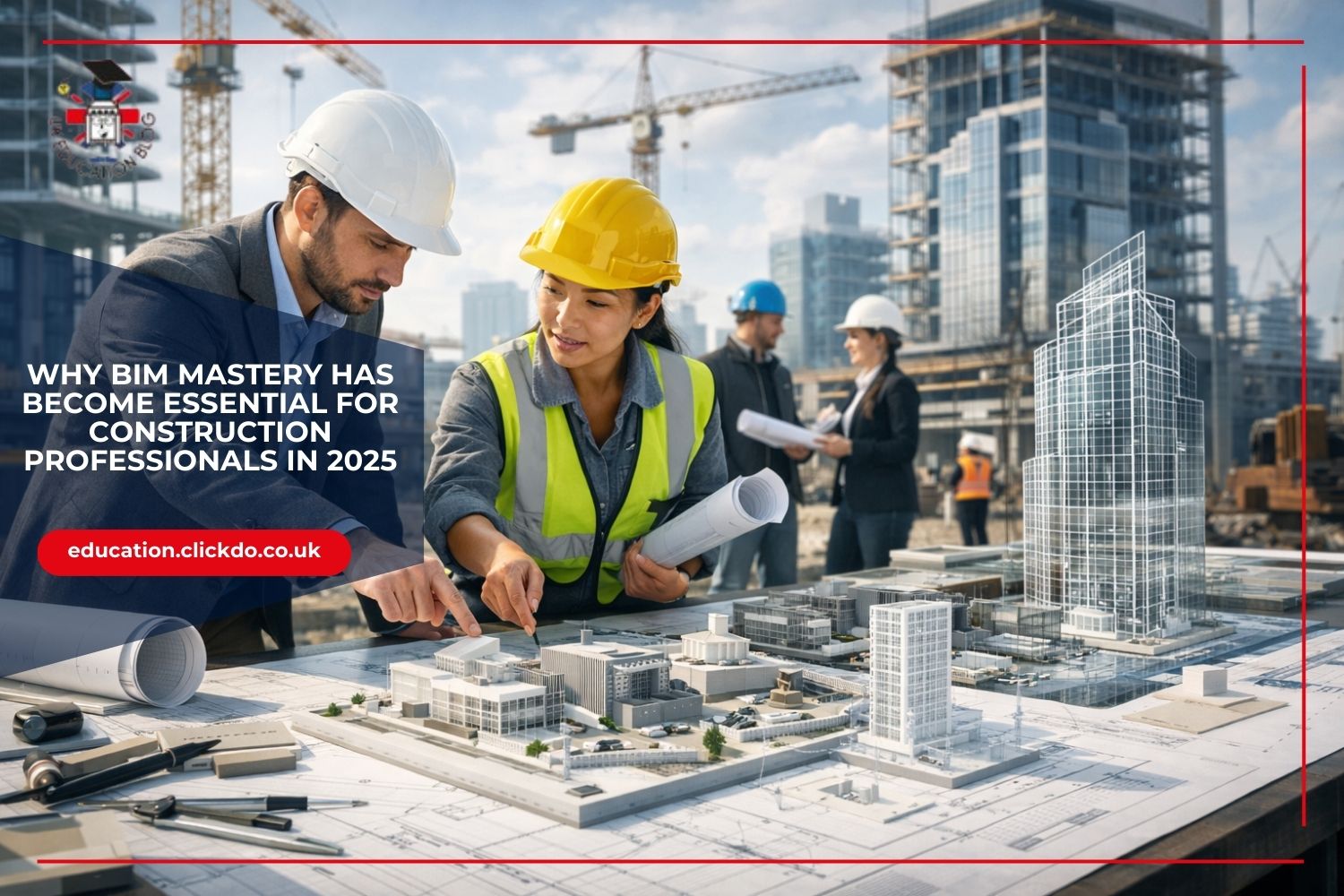

Data runs the construction industry now. If you work as an architect, engineer, or contractor, BIM is no longer optional.
Paper blueprints?
Those days are done. Your projects need digital workflows that connect every phase from design to demolition.
Building your BIM skills

Software evolves quickly. Your skills need to keep pace. Structured training gives you an edge over competitors who learn piecemeal on the job.
With BIM training for all experience levels, beginners start with foundations. Experienced users tackle advanced modules. You can learn Autodesk Revit and Navisworks with real project work, not just theory.
If you are ready to get certified, you can check out BIM course and certification with Graitec for hands-on training. The company partners with BSI to offer BIM Level 2 certification for individuals and companies.
The market tells the story
Here is what the numbers say. The global BIM market hit USD 5,062.64 million in 2024. By 2033, that figure reaches USD 17,949.61 million. Buildings get designed, built, and managed differently now.
What does BIM actually do? It creates a digital version of your building where every team member works from the same model. Forget those old 2D drawings. You get a 3D model packed with data. You see how parts fit together before anyone pours concrete.
What is driving adoption
Why is everyone moving to BIM? Three reasons stand out.
Governments demand it. Many countries require BIM on public contracts. You want that hospital project? Show your BIM capability first.
Clients push for speed. They want buildings delivered faster with fewer change orders eating into their budgets.
Sustainability matters more than ever. Tracking materials and energy use starts at day one now. Your team uses BIM to run performance simulations and measure carbon footprints. That information shapes decisions early when changes cost less.
Digital twins and real-time data
Think of a digital twin as your building’s live dashboard. Sensors feed real data into your BIM model. You monitor systems, predict maintenance needs, and test changes without touching the actual structure.
Here is the practical benefit. A problem shows up in your digital twin before it becomes an expensive repair in the real building. Facility managers watch energy patterns, spot waste, and make adjustments based on facts rather than guesses.
Cloud platforms change everything

Most large construction firms run BIM in the cloud now. The number sits above 80 percent. What does that mean for your daily work?
Your architect in London updates the model. Your engineer in Dubai sees it instantly. No more emailing files back and forth. No more version confusion. Everyone works on the same current model.
Projects move faster. Fewer coordination mistakes slip through.
AI enters the workflow
AI handles the boring repetitive stuff now. Clash detection that took hours? AI does it in minutes. Construction deviations get flagged automatically.
Firms using AI with their BIM tools report 25 percent productivity gains. That number matters when margins are tight and trainees need AI skills.
The software looks at past projects and flags risks before they become problems. Your team fixes issues early instead of scrambling during construction.
Looking forward
BIM stays central to construction. Tools improve. Workflows tighten. Build your skills now and you lead better projects.
Author Profile

- Stephen is a content creator and writer with years of experience covering different lifestyle and education topics for a wide range of e-magazines.
Latest entries
 careerJanuary 22, 2026Preparing for FRS 102: From Classroom to Career
 careerDecember 30, 2025Why BIM Mastery has become essential for Construction Professionals in 2025
 ed techOctober 30, 2025Digital Safety for Kids: What Parents Should Know About Screen Time, Device Permissions & Parental Controls
 ed techSeptember 29, 2025How to use VR to Ace your next Exams