


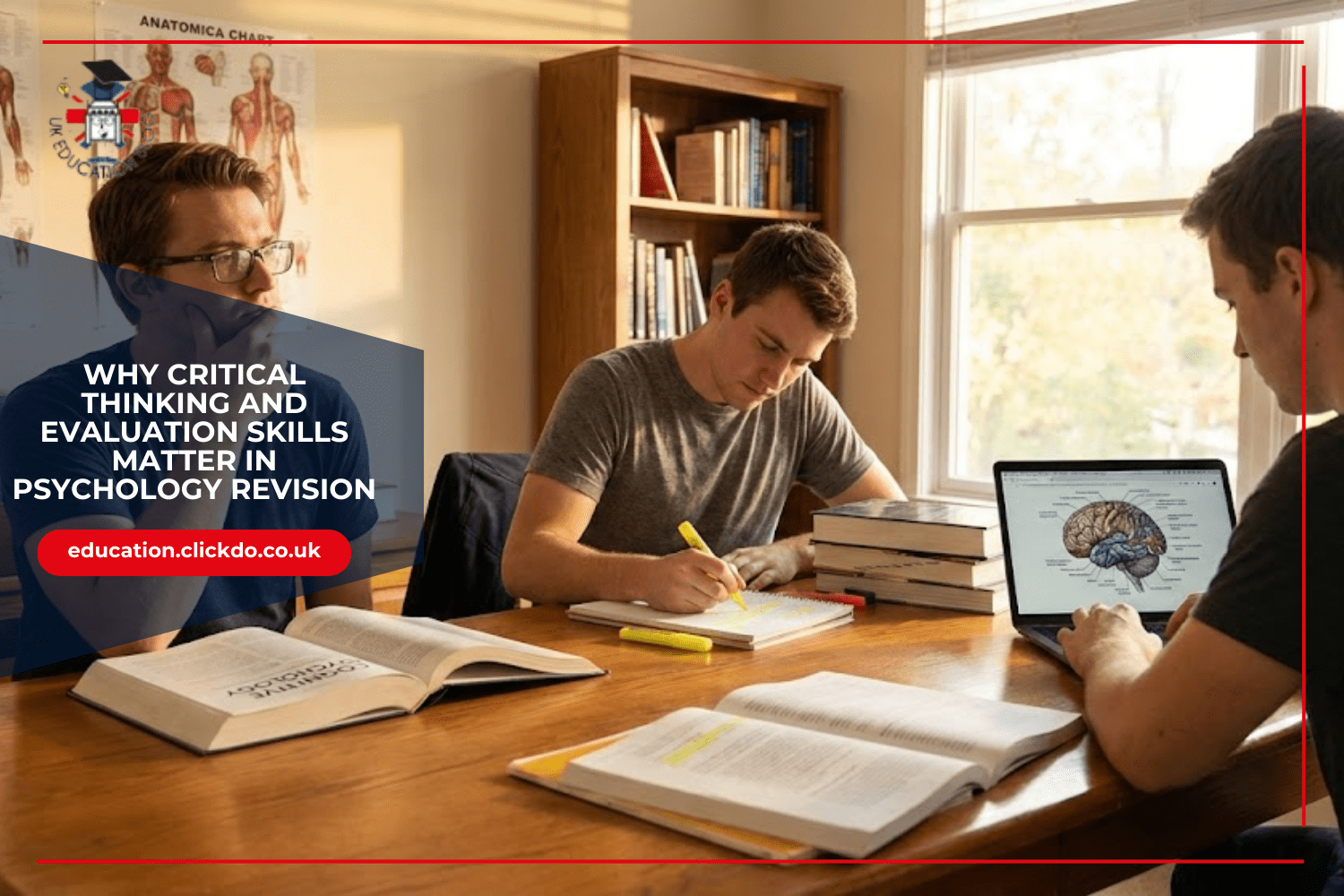

Strong critical thinking skills make psychology easier to understand because you’re not only learning each idea but also judging how it fits with wider evidence.
When you slow down and question why a study matters, you gain a clearer sense of how psychologists test behaviour.
This approach will boost your confidence, as you won’t be relying on recall alone but forming your own view of each topic. You also benefit from clearer thinking because it helps you handle complex ideas without feeling overwhelmed.
Keep on reading to see how these skills can shape stronger study habits and improve your understanding.
How Critical Thinking Strengthens Your Understanding

Critical thinking encourages you to look beyond simple facts and focus on how ideas connect. When you bring this mindset to your psychology revision, your work gains more purpose. And with explanations and valuable study materials from platforms like Save My Exams, you will understand how theories link to their supporting evidence clearly.
This skill also helps you judge the strength of each idea. You will start to notice when a study uses a narrow sample or a method that limits its conclusions. This gives you a sharper sense of which explanations are supported by facts and which ones need more caution. You’re not only learning the material but shaping the way you think about it.
Why Evaluation Skills Improve Exam Performance

Evaluation skills help you show depth in every long-answer question. You’re expected to judge how effective a theory is, so this skill supports clearer and more informed writing. When you practise it during revision, you gain a stronger sense of how to support each point without drifting into unclear and unsupported claims.
These skills also make complex content easier to break down. When you assess strengths and limitations in small, focused steps, you avoid confusion in pressured exam conditions. You can explain why research supports a point and why alternative explanations also matter. This creates answers that feel structured and confident.
Building Awareness Through Clear Judgment
Evaluation helps you notice the limits of research. You will start to see how sample size, cultural background, or setting can shape results.
This awareness prevents you from giving broad statements and encourages more precise thinking. You can also highlight when evidence is strong, and this gives your writing more weight.
How to Use Critical Thinking in Your Daily Revision

You can develop these skills through small, consistent habits. When you study a theory, ask yourself why the researcher chose a certain method and how this choice affected the results. This makes each study more memorable because you’re judging its purpose rather than just copying information.
Short checks during revision also help you stay active. These might include asking whether a study can apply to other groups or whether different methods would change the findings. Each question builds a stronger link between the content and your understanding of it.
Using Evaluation to Support Clear Writing
Evaluation strengthens your writing because it encourages you to explain each point with purpose. You learn to support claims with evidence instead of general statements. This gives examiners a clear view of how well you understand the topic.
It also helps you stay calm during timed questions. When you know how to build a balanced argument, you can organise your ideas quickly and avoid losing focus. This keeps your writing clear and consistent.
Developing Skills That Support Long-Term Success

Critical thinking and evaluation skills grow through regular use. When you question evidence and judge how theories explain behaviour, you build habits that make revision more effective. You can also compare topics with greater ease since you understand how each idea fits within wider research.
This will help you long after the exam is over. You will learn to scrutinise information and think critically for yourself as you develop yourself in university, work, and private life.
The Bottom Line
Critical thinking skills help you study with purpose and understand complex ideas with clarity. When you judge evidence carefully and assess theories with a critical eye, you build knowledge that supports every stage of your learning.
This creates a confident approach to psychology and prepares you well for exam success. You also gain a steady way of thinking that supports future topics and strengthens your long-term progress.
Author Profile

- Passionate education content creator and designer, contributor, writer and content marketing allrounder.
Latest entries
 careerMarch 3, 20263 Common Mistakes Students Make on their UK University Application
 language learningMarch 2, 2026How to Prepare for the JLPT: Tips and Resources for Exam Success
 learningDecember 17, 2025How to make School Handouts more Accessible for all Learners
 learningDecember 15, 2025Why Critical Thinking and Evaluation Skills Matter in Psychology Revision