Once the demands of revision and exams are over, most school and college leavers are faced with one important question – how to find a job? Will Potterton of Leavers Hoodies Company has this advice.
The final year of college or university is always a stressful and difficult time for students or school leavers. With exams out of the way and goodbyes said to teachers, lecturers and classmates, there’s little time to relax for those who have decided against pursuing further education. In a competitive market, there is no time to waste for those preparing themselves for the unknown world of work and their future career path.
Challenges for School Leavers
Job opportunities appeared strong for the 16-24 age group in 2018 with 43,000 fewer 16-24 year olds unemployed compared to the year before. However, the year 2020 has hit the UK economy hard with the Coronavirus pandemic and the following trends have emerged according to Youthemployment.org (data from October 2020):
- The current number of 16-24 year olds in employment is 3.53 million.
- There are currently 581,000 16-24 year olds unemployed.
- The Claimant Count (for benefits) for 18-24 year olds stands at 529,000. This has increased 1,300 on last month, and an increase of 304,900 on last year.
Accordingly, job prospects for school leavers appear more challenging as the employment market remains fiercely competitive. Therefore, school and college or university leavers need to have a clear strategy in place for their job search.
The most appealing employers can still afford to pick and choose. This is why it’s important for those looking for jobs to be aware of how and where to search for jobs for school leavers and how to aid their search and application process.
What to include in a School Leaver’s CV?
The CV is at the heart of your job application. If you don’t have a CV, or one that will make you stand out from the dozens of other school leaver applications an employer receives, you’ll have trouble finding a job. No matter how good your job search is, the CV gives employers a clear idea of whether your skills, written communication and experience are a good match for the role.
As a general rule, the standard headings for a school leaver’s CV should include personal details, employment history, voluntary work, skills and achievements. Employers won’t expect you to tick every box and have plenty of experience; you’re a school leaver after all. But include everything that you feel showcases your strengths: were you captain of the school hockey team? Member of a school committee? Or did you take part in extracurricular activities? Things like this should be included in your CV plus CV skills.
Reed has a school leavers CV template which is ideal for getting it right. Once you’ve filled in the blanks to a generic template, get it proofread.
Social Media Detox
It’s true that social media brings huge opportunities to school leavers but it can also easily be the reason for employers looking elsewhere in their job search. In the modern age, recruiters are likely to look at an applicant’s social media accounts before inviting them to a virtual or personal interview. According to a 2017 survey by CareerBuilder, 70% of employers use social media to screen candidates before making a hiring decision.
If your social accounts are full of derogatory posts and problematic pictures, it won’t strike the right chord with employers. Cleaning up your social accounts is vital. You should run through your social media accounts and remove anything that would horrify an employer. Instead, use social platforms to show off your digital skills and give employers a taste of your creativity and portfolio.
Where to look for School Leavers Jobs?
With an appealing CV to hand, where should a school leaver go to look for their first job?
Career Advisors
Your college career advisors should be a school leaver’s first port of call. If there are no career advisors in-house, they will at least be able to put you in the direction. They will help to choose a career path, advise on what jobs to apply for and point you in the right direction of career days and fairs.
Social Media Channels
According to the Society for Human Resource Management, 84 per cent of companies are using social media for recruiting and nine per cent are planning to use it. Posting job adverts on social channels is now the norm for companies so it’s important that you follow and interact with companies you’re interested in working for.
Facebook, Twitter and Instagram are great for sourcing opportunities but LinkedIn is likely to be the platform where employers will come to you. LinkedIn is the best way to interact and network with similar professionals and if you aspire to be in a professional role, creating an appealing LinkedIn profile is a must.
Browse Job Sites
The best place for you to find temporary, permanent, part-time positions in your local area is on one of the many job board websites. You can use these sites to also see what skills are desired for the jobs you are looking to apply for so you can then tailor your CV to include these.
It can be tempting to automatically send the recruiter your CV by applying with a click of a button, but it is better to tailor your application for each job you apply for. Read what the job desires and highlight why you match these skills in your covering letter.
Make it easy for the employer to see that you tick all of the necessary boxes.
If you want to conduct a more focused search in a specific industry that you’re interested in, you can sign up to independent recruitment agencies. By having your name on file at the agency, you will be the first to hear about suitable opportunities that arise.
Freelance
Working freelance is a great way of getting experience whilst on the job search. Depending on the skills that you possess, there are a range of freelance websites that you can sign up to.
People per hour and Upwork offer varied work, from web development, design and content writing, to administrative tasks. If you’re looking to get into education then check out online tutoring and teaching jobs. And for journalists to be, www.journalism.co.uk is a site that allows editors to find and hire freelance journalists for one-off stories or ongoing work. Have a look around and see if there are any sites for the skills you are competent in. Read more about the vast possibilities for online work as a freelancer in these guides:
48 Home Business Ideas
35 Remote Working Jobs
Best Online Jobs
The future of work is digital and even the OECD recognises this stating on their website:
DIGITALISATION AND GLOBALISATION HAVE SPARKED RADICAL SHIFTS IN HOW WE LIVE AND WORK. THE CORONAVIRUS (COVID-19) CRISIS HAS ACCELERATED THESE BEYOND ANYTHING WE COULD HAVE IMAGINED.
Every school leaver should carefully think about the industry and field they want to move into and its potential to survive or even thrive in this digital era. SeekaHost University can equip you with vital digital skills like SEO or social media marketing and more and you can learn more about why everyone should learn digital marketing there too.
About the author
Will Potterton is Director of leavershoodiescompany.co.uk, a company which provides high quality, personalised leavers hoodies to the teachers and parents of school leavers, as well as directly to the students themselves.
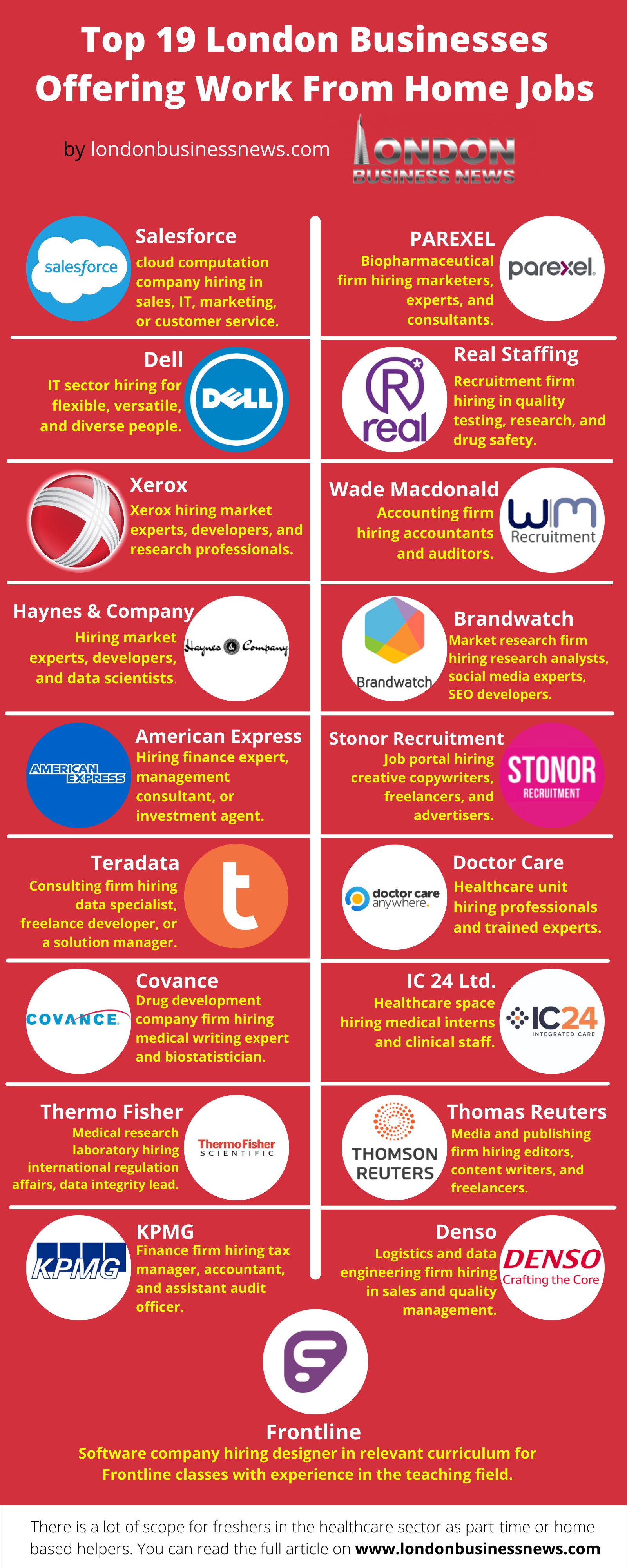
As a school leaver or trainee you should also consider moving into work from home jobs that many UK and London businesses now offer as a result of the pandemic. Go through the infographic below or read the full article on the London Business News blog for more information.
Please include attribution to www.londonbusinessnews.com with this graphic.
Share this Image On Your Site





 or order to manage their work effectively. Most of them rely on teachers or professors to manage their coursework for them.
 post, you can put a video tutorial in it so that people can watch and understand better the steps you are explaining. In every video that you post, you can use a






 Humans generate over 2.5 quintillion bytes every day. Now, that’s a large amount of data. Several machines can handle this amount of data effectively. A large number of data is mostly due to social media platforms such as Facebook, Instagram, Twitter, and Telegram. The emails we receive and send are also part of these vast amounts of data. The posts we view, like, share, or even comment on these platforms, are examples of the data constituting the large data amounts. AI makes sorting this data more manageable.


 During this is period, the focus for many countries and settings is distance learning, leveraging technology for
  Ordinarily, schools have a strict process for who can have access to children during school hours and activities like sports, etc. Some measures and legally required checks are
  It is very important that schools can retain the