


Due to the COVID-19 pandemic, students had to switch to online learning. These changes caught some of them off guard. Nobody expected to go remotely starting in 2020, but since circumstances required us to, there was no other option available.
However, you can see how students could be easily confused by the transition process. Some of them quickly adapted to the new routine, while others became discouraged and lost interest in studying.
Let’s see why that happened, and how we can improve the online learning system.
Reason #1: They Struggle to Adapt
Switching from in-person to online can be a struggle for many students, especially the early years and primary students. Not everyone has been exposed to computer-based learning from early on, so adapting to a new situation in such a short amount of time without any training can be challenging. Using Course Management Systems or CMS is something that should have been taught a long time ago in schools. However, most students did not take any classes on computer adaptability. Their mindset is not working this way. Naturally, they need longer to adapt to the new circumstances.
Solution: educating the young by developing computer-based mindsets and digital skills within each individual from an early age.
Reason #2: They are not Technologically Prepared
Most older students are good with computers, but they may not be tech-savvy. That being said, they are not properly prepared to handle technological issues. Unfortunately, online classes require a great deal of technological preparation and know-how. Not everything runs smoothly all the time, so “fixing software” or “hardware” becomes a necessity.
Besides that, not all students are good with PowerPoint, Microsoft Word, or Excel. Younger students never took any classes on these subjects. They are not prepared to use all of these programs, so they naturally become discouraged to learn online.
Solution: get students signed up for basic computer-based classes online, where they learn the necessary how-to’s.
Reason #3: They cannot Manage their Time Right
Another important issue is time management. Not all students are organized enough to finish their tasks on time or order to manage their work effectively. Most of them rely on teachers or professors to manage their coursework for them. With online education things have changed. Students don’t physically go to class anymore, meaning they can study whenever they find it fit. For some, this is absolutely amazing, and it works. For other whatsoever, this is a big setback. Time flexibility does not match their disorganized behaviour.
Solution: setting up a regular schedule where they can track their work. Setting reminders and checking deadlines constantly. Buying a planner and writing down all their assignments. Many learning management systems also provide student calendars where all their assignments and tasks are stored with reminders.
Reason #4: They experience Technical Issues
Some students don’t have access to the Internet at all or only very limited, especially students in third-world countries or more deprived areas. If they cannot get online, they cannot access their online classes. And even if they could get online, they wouldn’t know how to use a computer. This significantly impacts their learning and development while schools are closed and it counts as another form of school absenteeism really. These students will require much more learning support upon their return to school to ensure they won’t fail exams or assignments.
Solution: finding out what these kids need and providing them with the necessary gear. Learning exactly how to educate them with alternative ways like learning packs sent home for example.
Reason #5: They cannot Find Self-Motivation
Having worked for a professional essay writing service for four years, I know that a lack of motivation can be a huge downfall, especially when you’re working or studying remotely. Enrolling in online classes might be exciting, but it’s definitely a burden from all perspectives. As I mentioned earlier, technical issues can pop up, a lack of education on certain subjects can interfere with the learning process, or adaptability can be an issue. Finding motivation among all that is not easy; for some students, it’s impossible.
They’re constantly asking why, and they never get an answer. In-person schooling boosts their confidence and answers these questions. When you’re at home alone without any teachers or classmates, you’re naturally not as motivated.
Solution: John Carey, teacher, argues, “Teach kids to develop a positive attitude towards online learning. Talk about the pros of learning remotely and develop a mature mindset on the issue. Encourage asking questions and answer them carefully and mindfully.” In a nutshell, give them reasons to want to learn online!
Wrapping Up
E-learning has become important in every country of the world. But as long as we don’t educate kids on how to learn how to study, these changes might be overwhelming. We need to look at the problems and find a solution for each. I hope this article helped in this sense. Let’s change the world for the better, shall we?
Author Bio:
Jessica Chapman is a writing editor from Chicago. She works for best essay writing service uk and engages with students. In her free time, Jessica is into sport and politics, and enjoys travelling.



 employers looking elsewhere in their job search. In the modern age, recruiters are likely to look at an applicant’s social media accounts before inviting them to a
  skills in your covering letter.





 Humans generate over 2.5 quintillion bytes every day. Now, that’s a large amount of data. Several machines can handle this amount of data effectively. A large number of data is mostly due to social media platforms such as Facebook, Instagram, Twitter, and Telegram. The emails we receive and send are also part of these vast amounts of data. The posts we view, like, share, or even comment on these platforms, are examples of the data constituting the large data amounts. AI makes sorting this data more manageable.

 During this is period, the focus for many countries and settings is distance learning, leveraging technology for
  Ordinarily, schools have a strict process for who can have access to children during school hours and activities like sports, etc. Some measures and legally required checks are
  It is very important that schools can retain the




 People feel a sense of familiarity and develop a fondness when some stranger addresses them with their names. Personalized advertising is not possible on other channels. Still, digital marketing has given schools and universities opportunities to reach a target audience on a personal level. Data-driven marketing and
  Digital marketing gives different
  Various education institutes are on tight budgets and cannot afford to invest heavily in marketing. Therefore, digital marketing has outshone other marketing channels, as it has proven to be more effective and efficient. Educational institutes can send their message to even more people without spending huge amounts. For example, investing in social media marketing does not break the bank but can be more impactful, reaching far more people around the world that may be prospective students. Learning digital marketing for free adds a lot of value to any organisation and the
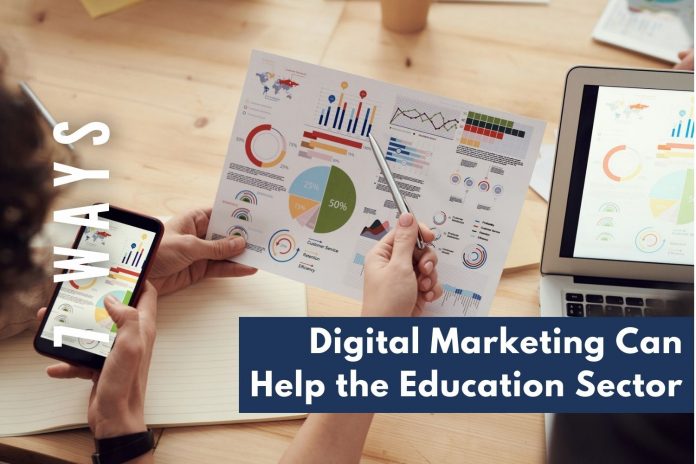
  Performance tracking is crucial for marketing campaigns. Other marketing channels have time-consuming and complicated processes to measure marketing results. Digital marketing can give a detailed report like
  When it comes to the conversion rate, traditional methods of marketing have not proven to give high rates. However, digital marketing achieves a high conversion rate. SMS, emails, and WhatsApp messages generally get a response because they are private. Through different channels of
  Educational institutes need to build a reputation and earn a prestigious college or university’s badge, which can set them apart from their competitors. Reputed institutes provide students with better education and use